
Your needs, this model
Does it fit your priorities?
Will the open ring keep noise out on a flight or in a loud office?
Sony says the open ring design does not offer active noise cancelling or traditional noise isolation. That design leaves the ear canal unsealed and keeps surrounding sounds more available; it is not a substitute for a sealed, quieting fit. The amount you notice depends on the environment, and this research-based assessment has not tested it on a commute or aircraft.
Explore this need in the finder →Do SBC, AAC and LC3 all use the same connection mode?
No. Sony's guide lists SBC and AAC on Classic Audio over A2DP, and LC3 on LE Audio. A host must support the mode, and LC3 requires an LE Audio connection; Sony says some features such as multipoint are unavailable during LE Audio. The maximum playback time is up to 8 hours for each listed codec, subject to app settings and use conditions.
Explore this need in the finder →Can I switch music between a phone and a computer?
Sony documents Bluetooth multipoint to two connected devices and switching the active music source without reconnecting. It does not mix two simultaneous music streams; playback comes from the device used last. The feature is unavailable with LE Audio according to the app feature notes, so treat the two-device multipoint arrangement as separate from the LC3 plan.
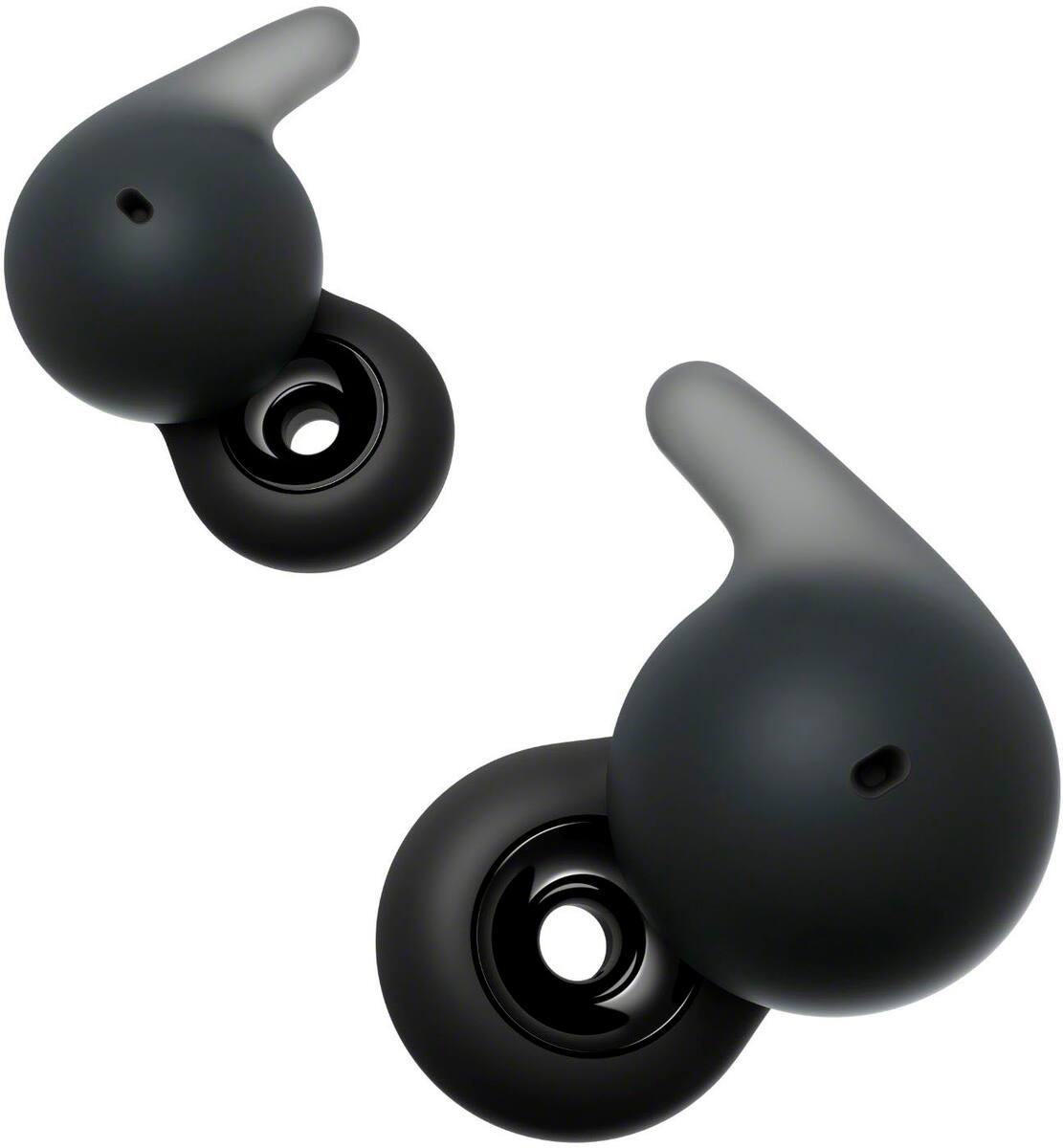
Explore this need in the finder →The LinkBuds Open is an open-ring earbud rather than a tip-sealed in-ear model. In Sony's US black WF-L910/B configuration, a ring-shaped part rests around the opening of the ear while a fitting supporter braces against the ear groove. The design leaves the ear canal unsealed, which is a central tradeoff rather than a small style detail. This assessment uses Sony's US product page, WF-L910 specifications and YY2964 instructions; it includes no personal fit trial, listening test or measured runtime.
Open ring, not a disguised noise-cancelling bud
Sony's product FAQ is unusually clear about the tradeoff: it says the LinkBuds Open does not offer active noise cancelling or traditional noise isolation. The ring design keeps the listener connected to surroundings, but it does not block a cabin, street or office in the way a well-sealed ANC model is intended to. Sony's description of “ambient sound” here refers to the openness of the design, not a microphone-based Ambient Sound Mode like the sealed LinkBuds Fit. Anyone who wants a quiet listening space should compare a closed model instead.
The physical arrangement still needs a check. Sony describes placing the driver over the lower portion of the ear opening and pushing the housing into the ear groove; the fitting supporters are part of the design. The soft body does not make every ear compatible, and the guide cannot predict how a user will feel after hours of wear. A return window is useful when comfort is unknown. The case also needs space for the supporters to sit properly when stored, so check that a seller's kit is complete.
Three codec routes, with one important boundary
The manual separates the wireless routes: SBC and AAC are supported with Classic Audio over A2DP, while LC3 is for LE Audio. Sony says LE Audio needs a compatible source and that some headphone functions are unavailable during that connection. The app's feature notes identify multipoint as unavailable with LE Audio. This is why the documented LC3 single-device arrangement and the two-device multipoint arrangement are separate here. A general codec list is not proof that every codec can be combined with every connection feature.
Sony's operating-time table lists up to eight hours of music with each codec—SBC, AAC and LC3—from a fully charged headset. A short charge of about three minutes can provide about one hour of playback, according to the guide. The US product page says the case adds up to 14 more hours, for a total up to 22 hours. Those are source claims and can change with sound settings and actual use. The manual specifically warns that functions such as EQ, DSEE, Speak-to-Chat, voice assistant activation, Service Link and Adaptive Volume Control can reduce the available time.
Multipoint, touch, and care
Sony documents simultaneous Bluetooth connections to two devices and switching playback without a new pairing step. The instructions describe music coming from one source at a time, not two streams mixed together. A third device connection displaces one of the active connections. The Black product page also promotes customizable touch and head-gesture controls, but button configuration and host behavior depend on app setup and software. If a laptop-and-phone handoff matters, confirm the current manual covers your devices and try the actual connection before relying on it.
The support sheet gives Bluetooth 5.3, SBC/AAC/LC3, up to eight hours of music, an IPX4-equivalent earbud rating and case weight of about 1.08 ounces. The included US kit lists the charging case, USB cable, warranty card and reference guide; the manual calls the cable USB-A-to-USB-C and documents the fitting supporters as part of the headset. Sony says the case is not water resistant and instructs users to dry the earbuds and case before charging. IPX4 applies to the earbuds only, and the headset is not for use in water.
Who should compare it?
This model fits a different decision than the Fit or the sealed XM earbuds. It is for comparing an open-ear ring, awareness of nearby sound, and several codec options, not for comparing which ANC setting is strongest. The standard black listing is WF-L910/B; the same family is also offered in White under a separate suffix. A White retail listing does not make its image interchangeable with the Black pair shown here. Check exact model, included cable, seller and return policy; verify LE Audio support on the source device; and decide whether an open design suits your surroundings before treating a specification match as a practical one.
Other documented finish
The White WF-L910/W listing is a separate finish from the Black WF-L910/B model used for the review's lead image. The White picture below is a visual identification reference only; it is not a claim that the colors have different functions or that the pictured earbuds are the full package. Check the exact suffix and supplied kit on the seller's page.
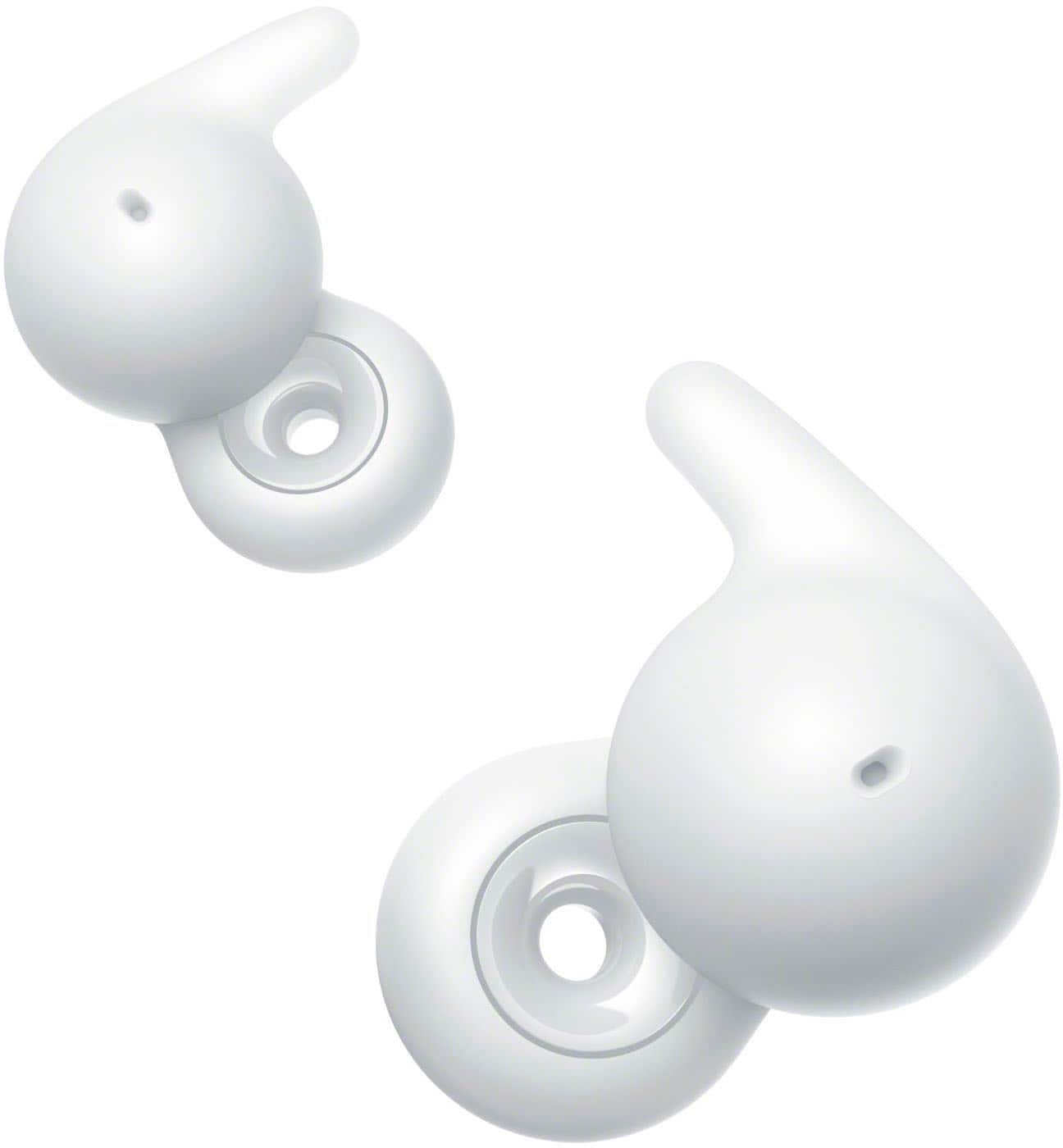
Exact identity page: Sony's White US listing names model WF-L910/W. The visual caption identifies a retailer-sourced appearance image; the family specifications and Help Guide above continue to support the functional assessment.
Sources: Sony's Black US listing, WF-L910 specifications and YY2964 Help Guide.
Key specifications
Key details at a glance
| Wearing style | Open-ear |
|---|---|
| Active noise cancellation | No |
| Water protection | IPX4 earbuds; case not water resistant |
| Bluetooth version | 5.3 |
| Supported codecs (mode matters) | sbc / aac / lc3 |
| Two-device Bluetooth multipoint | Yes |
| Weight per earbud | 0.18 oz |
| Charging-case weight | 1.08 oz |
| Maximum SBC music time | 8 hours |
| Maximum AAC music time | 8 hours |
| Maximum LC3 music time | 8 hours |
| Manufacturer total with case | 22 hours |
Use the exact model’s instructions for operating limits, supplied equipment and version differences.
Sources for this review
Sources for this assessment
Compare the documented details with your routine
Use the finder to combine only requirements supported by one documented operating arrangement. It cannot guarantee comfort or compatibility with every host.