
Your needs, this model
Does it fit your priorities?
Is CX SPORT a sealed in-ear design, and how is it secured for movement?
Yes. Sennheiser calls the coupling ear canal and lists four ear-adapter sizes (XS/S/M/L) plus three ear-fin sizes (S/M/L). The manual describes wearing the cable behind the head or in front, adjusting the cable organizer, and clipping the neckband to clothing during a workout. That documents adjustment options, not your personal seal or a guarantee against movement.
Explore this need in the finder →Can CX SPORT remain connected to two Bluetooth devices?
Sennheiser's launch note says the CX SPORT can connect to up to two devices simultaneously. Its manual separately lists SBC, AAC, aptX and aptX Low Latency. Those are device/codec capabilities, not a claim that two audio streams play at once or that any host will negotiate every codec; check the selected phone or computer's Bluetooth support.
Explore this need in the finder →Is CX SPORT waterproof, and what does its moisture claim actually document?
Sennheiser's U.S. product copy calls it sweat and splash resistant, but the checked manual does not assign it an IPX4 or IP57 rating and also tells users to keep it dry. Treat the marketing claim as limited rather than a swimming, showering or submersion guarantee; this assessment does not match it to either rated-water option.
Explore this need in the finder →Does the six-hour CX SPORT figure mean six hours of ANC listening?
No. The model manual specifies up to six hours in A2DP music mode and up to 8.5 hours in HFP talk mode. It does not document active ANC or an ANC-on music duration. The product is end of life, so the original new-battery figure also cannot predict the health of a particular older unit.
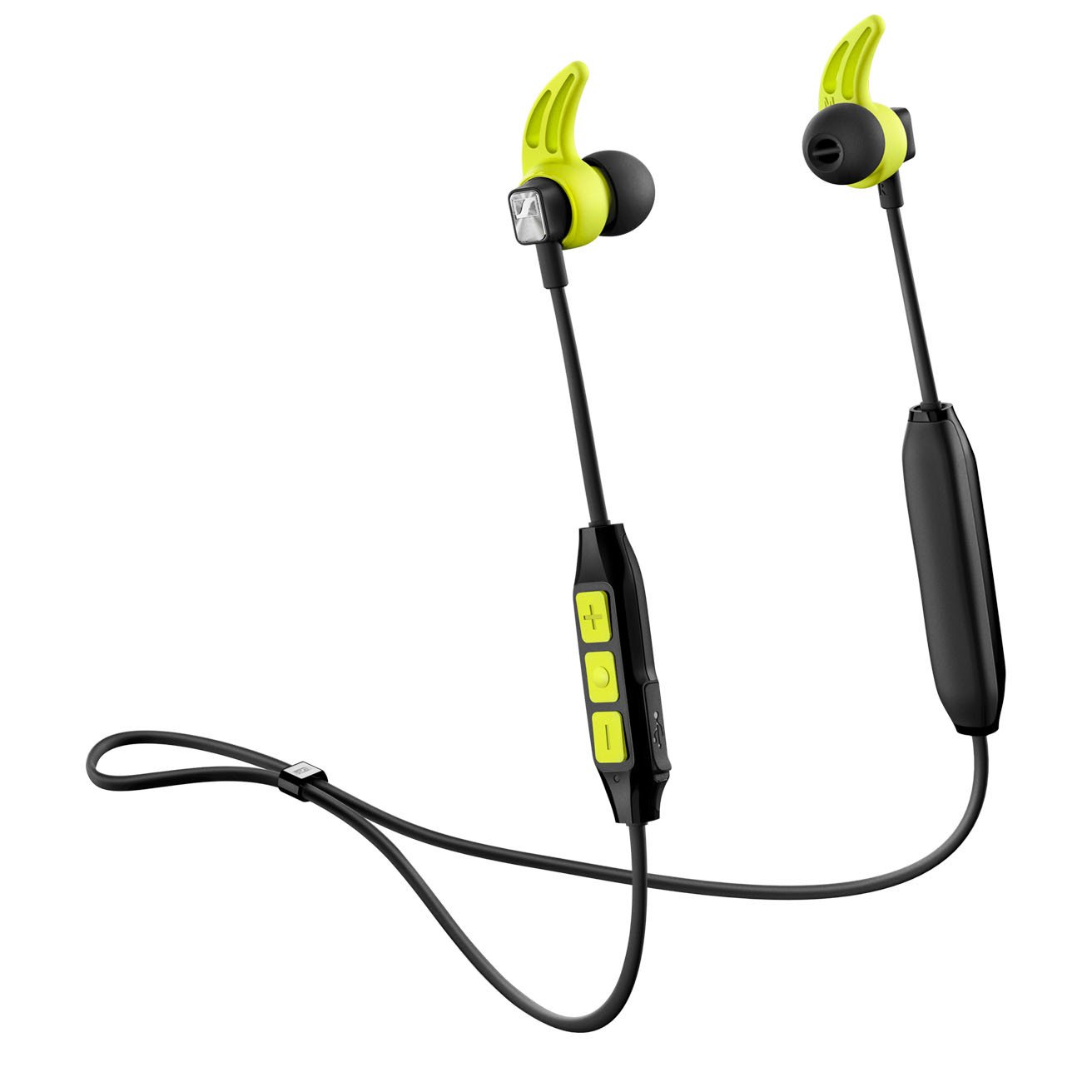
Explore this need in the finder →Sennheiser’s CX SPORT is an earlier Bluetooth neckband: two sealed-tip earbuds joined by a cable that can sit behind the head or in front. Its U.S. product page identifies article 508256 and marks the product end of life. This assessment is based on Sennheiser’s page, its CX SPORT manual and the original launch note—not personal listening, exercise, fit or water testing.
A very different kind of “wireless earbud”
The word wireless here describes the Bluetooth link to the phone, not two independent buds. A short cable connects the earphones, inline controls and battery housings. That structure is the defining reason to consider CX SPORT: it may suit someone who prefers connected earpieces and physical cable management over completely separate buds. It also means there is no charging case to put in a pocket or use as an extra battery. Sennheiser’s page names one U.S. article, 508256; it does not show a separate functional configuration or a finish selector.
Its shape also makes old inventory checks unusually important. “End of life” on Sennheiser’s page means it is no longer available there; it does not tell us what other sellers have, whether any listing is new or used, or how much capacity remains in a built-in battery.
Adjustable fit helps explain the sports label
The manual lists four silicone ear-adapter sizes (XS through L) and three ear-fin sizes (S, M and L). Its fitting instructions ask the wearer to settle the fins in the ear bowl, adjust the cable organizer, and wear the wire either behind the head or in front. A clip can attach the neckband to a shirt during movement. This gives the model more mechanical fit adjustments than a simple one-piece sealed earbud, but a size menu is not a promise that the tips will seal or the fins will feel comfortable in a particular ear.
Sennheiser’s U.S. copy and launch material call CX SPORT sweat and splash resistant. The manual does not state an IPX4 or IP57 rating, however, and its care section says to keep the product dry. I would not translate that marketing language into permission for swimming, showering or submersion. The conservative distinction is useful: the product has a maker-stated sweat/splash claim, but no standardized rating documented in the sources checked here.
Two-device connectivity and codecs are conditional benefits
The launch note says CX SPORT can connect to up to two devices simultaneously. That can be relevant if a phone and computer both matter, but the wording supports two connections, not two concurrent audio streams or a guarantee about how a particular host switches sound. The finder counts this as a two-device capability while the review keeps those limits visible.
The manual identifies Bluetooth 4.2, with SBC, AAC, aptX and aptX Low Latency support. Those codec names are compatibility choices, not automatic sound upgrades: the playback device has to support the same format and negotiate it. aptX LL is the more specific reason to look at this model for video synchronization, but only with a compatible source. It is an older Bluetooth implementation, so shoppers relying on present-day multipoint behavior, codec settings or host-device support should verify the exact phone or laptop rather than infer it from the earbuds’ capabilities alone.
Separate the music and call battery figures
Sennheiser’s manual lists up to six hours in A2DP music mode and up to 8.5 hours in HFP talk mode, with about 1.5 hours for a full charge. The higher call-time number is not a music-listening figure. The six-hour maximum is a manufacturer specification rather than a measurement in this review, and it is not associated with ANC: no active noise cancellation or ANC-on music duration is documented for CX SPORT.
Charging is through the neckband’s Micro-USB input, not a case. The launch note separately claims that ten minutes of charging adds another hour of playback. That is useful context if the original feature still works on a unit, not a promise that a used battery will recover like a new one. Because the model is end of life, the manual’s original runtime cannot establish present battery health.
What to check before comparing a listing
For a sealed, fin-supported neckband, CX SPORT is a specific earlier option if you accept Micro-USB, no charging case, no documented ANC and the lack of a published IP rating. It is a poor match if your must-have is a standardized IPX4/IP57 classification, active cancellation, wireless case charging or a guaranteed six-hour runtime from a years-old individual battery. For a current daily-use purchase, compare it with currently referenced designs in the finder rather than treating the EOL label or old specification as evidence of a live offer.
The manual’s original package list includes the four tip sizes, three fin sizes, charging cable, clip and pouch. That is a checklist for the original retail box—not proof that a particular resale offer contains them. Ask the seller to identify article 508256 and confirm both earbuds, a functioning Micro-USB charging path, the needed adapter and fin sizes, and the return terms. If the seller cannot verify battery charging and pairing, an old maximum-runtime figure does not resolve that uncertainty.
Bottom line
CX SPORT’s appeal is unusually concrete: a connected-earpiece neckband with multiple ear tips and fins, inline controls, a claimed two-host connection mode and aptX Low Latency support. Those details may matter more to a buyer than a modern all-in-one feature list. Its limitations are equally clear: the six-hour number is a historical A2DP specification, water resistance is not given an IP classification, Micro-USB replaces newer charging conveniences, and an actual older unit’s battery condition must be checked on its own. Treat it as a carefully identified earlier model, not as a claim about stock, durability or performance in your ears.
Key specifications
Key details at a glance
| Wearing style | Sealed in-ear |
|---|---|
| Active noise cancellation | No |
| Wireless charging case | No |
| Bluetooth version | 4.2 |
| Supported codecs (mode matters) | sbc / aac / aptx / aptx_ll |
| Two-device Bluetooth multipoint | Yes |
Use the exact model’s instructions for operating limits, supplied equipment and version differences.
Sources for this review
Sources for this assessment

Compare the documented details with your routine
Use the finder to combine only requirements supported by one documented operating arrangement. It cannot guarantee comfort or compatibility with every host.