
Your needs, this model
Does it fit your priorities?
Are the 2017 Pixel Buds truly wireless between the two earbuds?
No. Google's model-specific support warning says the cable between the earbuds carries power and audio, and the original launch calls it an adjustable fabric loop. The host connection is Bluetooth, but this is a cord-linked pair, not two independent true-wireless buds. Check that the cord and both earpieces are intact in any older offer.
Explore this need in the finder →What wearing style is documented for the 2017 Pixel Buds?
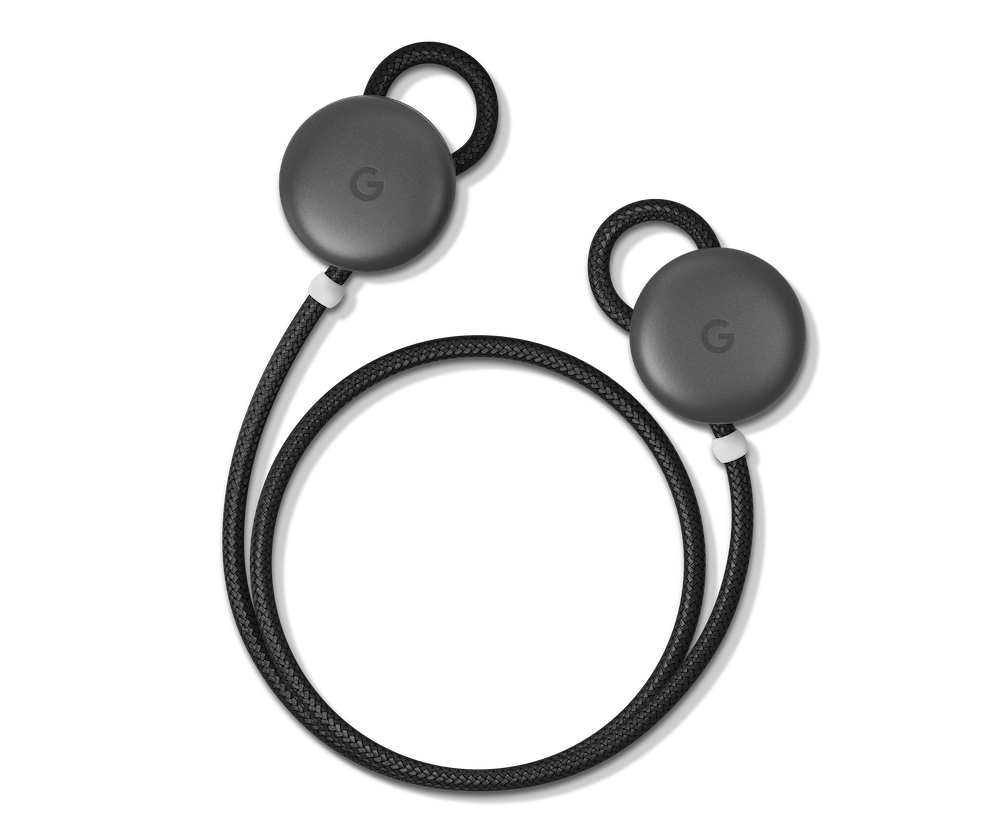
Google's Gen 1 instructions say to adjust the fabric loop length and tuck the loops into the ears; the official Just Black render shows round earpieces without sealed silicone canal tips. This assessment classifies the design as open-fit, but that visual and setup evidence cannot establish how securely it will sit in an individual's ears. No personal fit test was performed.
Explore this need in the finder →What runtime does Google publish, and does it describe ANC listening?
Google lists up to five listening hours per charge and up to 24 hours with a fully charged case. Its footnote says the figures are approximate pre-production results from 2017 and actual use may vary. The reviewed model sources do not describe ANC, so neither published music figure is an ANC-on runtime; battery health in an older unit is unknown.
Explore this need in the finder →Does the Gen 1 case support USB-C and wireless charging?
Google's Gen 1 specification lists USB-C charging. The reviewed page does not establish Qi charging or explicitly say the case cannot charge wirelessly, so this assessment leaves wireless case charging unknown rather than treating USB-C as proof of no wireless support. Verify the exact case supplied with an older listing.
Explore this need in the finder →Can I require SBC or two simultaneous device connections?
The Google Gen 1 sources reviewed here do not name SBC or another supported codec and do not document two-device Multipoint. Google notes that multiple pairs of Pixel Buds cannot connect to one phone, but that is not the same claim as a headset switching between two hosts. Treat both requirements as unverified for this model.
Explore this need in the finder →Is there a documented water-resistance rating?
The checked 2017 Google launch and Gen 1 support specification do not provide an IP rating or a rated-component boundary for the earbuds or case. Do not infer water resistance from its use as a wearable or treat it as matching an IPX4 or IP57 requirement.
Explore this need in the finder →Google's first Pixel Buds are easy to confuse with later products that share the name. This is the Gen 1 model introduced in 2017: Bluetooth connects it to a phone or other host, but a fabric cord also joins the left and right earpieces. That tradeoff is the defining shopping question. You get a pair that can hang around the neck and has adjustable loops rather than two separate buds that disappear into a pocket-size charging case; you do not get a modern true-wireless arrangement.
A cord-linked layout, not two independent buds
Google's launch announcement presents the fabric loop as a quick way to adjust each side without swapping parts. Its model-specific support instructions say to pull the cord to set each loop and tuck the loops into the ears. Google also warns that the cable between the earbuds carries power and audio and should not be cut. In other words, Bluetooth handles the link to a compatible host, while the buds remain physically tethered to one another. The official image below shows that exact Just Black pair and cord; it does not show a case or full retail package.
This layout may appeal if you prefer the buds to remain joined when removed, but it is a different wearing and storage routine from independent true-wireless earbuds. The round earpiece has no silicone canal tip in Google's image, and no replaceable tip sizes appear in the Gen 1 setup or specifications. I classify it as open fit from those exact design sources. That is not a promise that it will stay in place, feel comfortable, or sound unobtrusive in your own ears; no fit trial was performed for this assessment.
Pairing depends on the host and era
Google's Gen 1 requirements say the headset can pair with a Bluetooth 4.0-or-newer companion running Android 5.0 or iOS 10 or later. That is a host requirement, not the earbuds' own Bluetooth version. The launch and support pages also describe quicker pairing and Google Assistant functions on compatible Android phones; the full Assistant path needs an Assistant-enabled Android device, the Google app, a Google Account and a data connection. Translate features have additional Google app and phone requirements. A generic Bluetooth pairing indication should not be read as a guarantee that every older phone still supports each Google service.
There is one right-ear touch surface for music and call controls, including swipe volume gestures. Google says more than one pair of Pixel Buds cannot be connected to a single phone; that wording concerns multiple earbud pairs and does not document whether one pair supports two-host Multipoint. I therefore do not list two simultaneous device connections as an established capability. Google also does not name a supported SBC, AAC, LDAC or LC3 codec in the model-specific specifications. If a codec or multi-device requirement is essential, do not assume it from Bluetooth alone.
Five hours on the buds is not 24 continuous hours
The Google specification gives an up-to-five-hour listening maximum from a charge and up to 24 hours when the charging case is included. It identifies a 120 mAh battery in the earbuds and 620 mAh in the case, and lists USB-C for charging. The 24-hour number is a combined case-supported figure, not one uninterrupted earbud session. Neither number is an ANC-on claim: the model-specific feature and control materials do not describe active noise cancellation. I classify it as a no-ANC design by feature-inventory inference, not by a direct Google sentence saying “no ANC.”
Google's footnote matters because the test dates from September 2017: it says the approximate results used pre-production Pixel Buds and a pre-production Pixel 2, and actual results may vary. It cannot predict how much charge an older pair retains now. A used set should be checked with its own matching case: confirm both sides make contact and charge, the USB-C port is sound, the fabric cord is intact and the case can recharge the buds. The reviewed pages do not establish wireless case charging, a water rating, or a case water-resistance boundary; those are unknown, not features to borrow from newer Pixel Buds.
How it differs from later Pixel Buds
Google's later Pixel Buds generations changed the physical arrangement and functions, so family branding alone is not enough to identify a used listing. The 2017 model is cord-linked and has no reviewed ANC, named codec, IP rating or two-device plan. Google's separately documented A-Series uses sealed tips and a stabilizer arc, has a USB-C case and an IPX4 rating for the earbuds only, but is also a no-ANC model. Google's current Pixel Buds 2a is a distinct current-reference configuration with ANC and newer documented host features. Those later capabilities do not apply to Gen 1.
For someone comparing older models, Gen 1's main distinction is not a measured sound advantage: it is the fabric-connected layout, simple case-supported listening claim and Google-specific Assistant path. If your priority is a sealed tip, a particular water rating, wireless charging, documented codec or ANC runtime, this assessment does not establish those requirements for the 2017 pair. See the same-condition finder for earlier open-fit models without ANC, then compare the exact item and battery condition rather than relying on the family name.
Color and offer checks
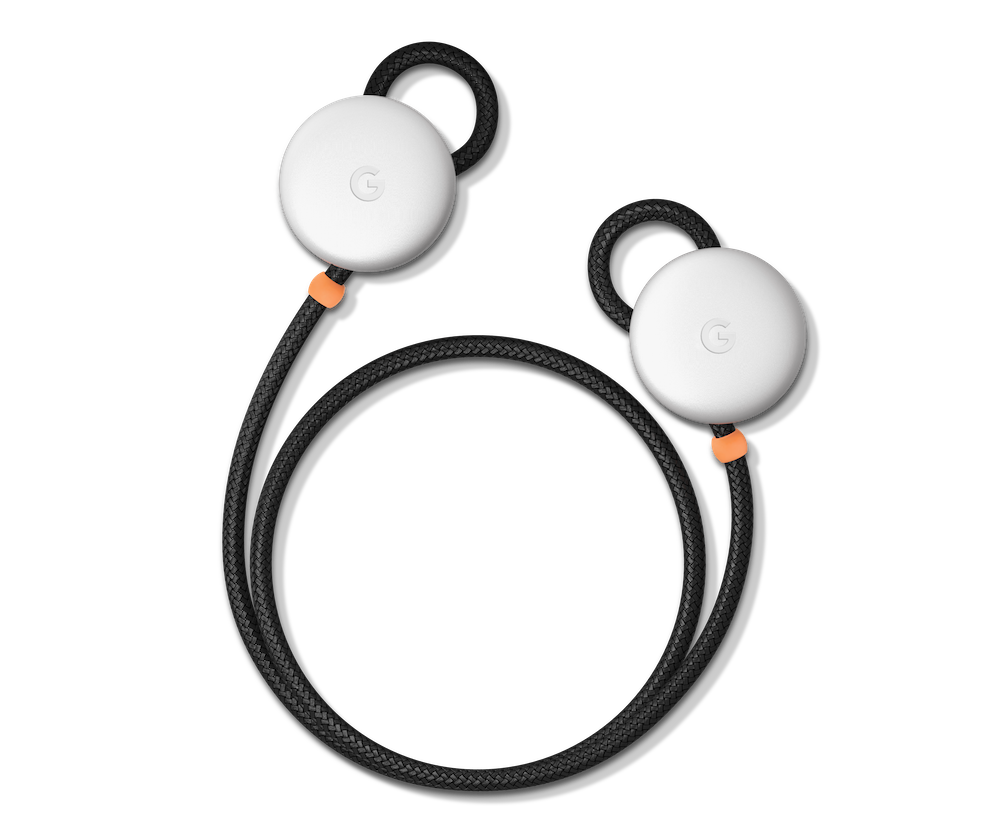
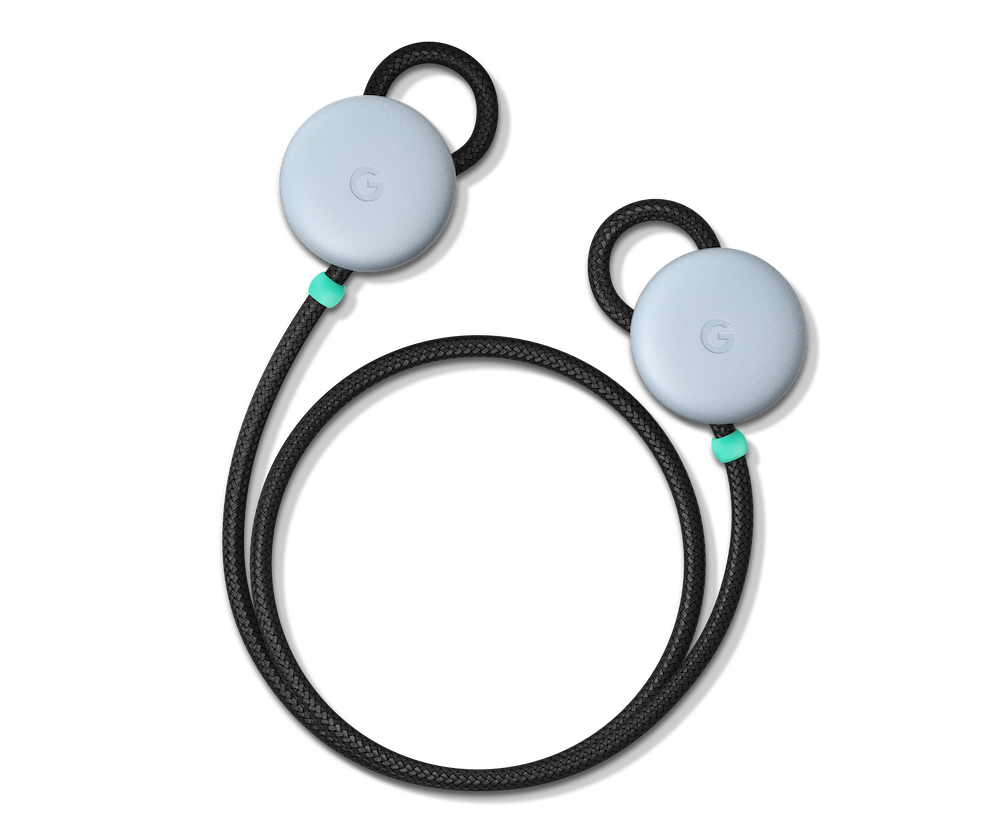
Google's U.S. launch and later Gen 1 support table name Just Black, Clearly White and Kinda Blue. The color renders below identify the finish, but not a retail box or a current U.S. offer. No finish-specific complete-package SKU was surfaced. Before considering an older listing, confirm it explicitly says Pixel Buds Gen 1 (2017), shows the same color and includes the matching charging case. Ask about the remaining battery behavior, charging contacts, cable wear, return window, seller and any warranty; a 2017 maximum is not a guarantee for the individual unit. The old launch price is historical and is not a current price or recommendation.
Primary sources
- Google's October 2017 Pixel Buds launch article, which names the U.S. release, color choices, adjustable fabric loop and charging-case listening claim.
- Google's model-specific Gen 1 (2017) setup and specification page, including the cable warning, host requirements, USB-C charging, battery maxima and testing footnote.
Key specifications
Key details at a glance
| Wearing style | Open-ear |
|---|---|
| Active noise cancellation | No |
Use the exact model’s instructions for operating limits, supplied equipment and version differences.
Sources for this review
Sources for this assessment
Compare the documented details with your routine
Use the finder to combine only requirements supported by one documented operating arrangement. It cannot guarantee comfort or compatibility with every host.